
By Aryan Babariya | AryanOnSite

Concrete has a strange weakness.
It is one of the most widely used construction materials on Earth, yet one of its biggest problems begins long after it has been poured.
Small cracks can form because of shrinkage, temperature changes, water penetration, loading, and environmental exposure. Left untreated, these cracks can allow water and aggressive chemicals to reach reinforcement, accelerating deterioration and increasing maintenance costs.
This is where self-healing concrete enters the picture.
Among the most interesting approaches is bioconcrete—concrete that uses microorganisms, particularly bacteria, to help seal cracks through biologically induced mineral formation. In laboratory experiments, the concept can look remarkably effective.
So there is a question:
If the science works so beautifully, why isn’t every bridge and highway already being built with bioconcrete?
The answer isn’t simply whether bacteria can heal concrete.
The real challenge is whether we can make the technology survive production, remain economically viable, and work reliably at infrastructure scale.
That is the scale-up bottleneck.
The Science Is Ahead of the Construction Industry
The basic concept behind bioconcrete is surprisingly elegant.
Certain bacteria can remain dormant inside a concrete matrix. When a crack forms and water enters, the change in conditions can activate the bacteria. They can then contribute to the formation of mineral deposits—particularly calcium carbonate—which can gradually fill or seal the crack.
In theory, this creates a biological repair system embedded directly inside the material.
Instead of:
Crack → Inspection → Maintenance → Repair
the goal becomes:
Crack → Activation → Mineral Formation → Partial Healing
This could potentially reduce maintenance requirements and extend the service life of concrete structures.
However, laboratory success does not automatically translate into a highway, bridge, tunnel, or dam.
The environment inside a concrete mixer is dramatically different from the controlled conditions of a laboratory.
The First Problem: The Survival Gap
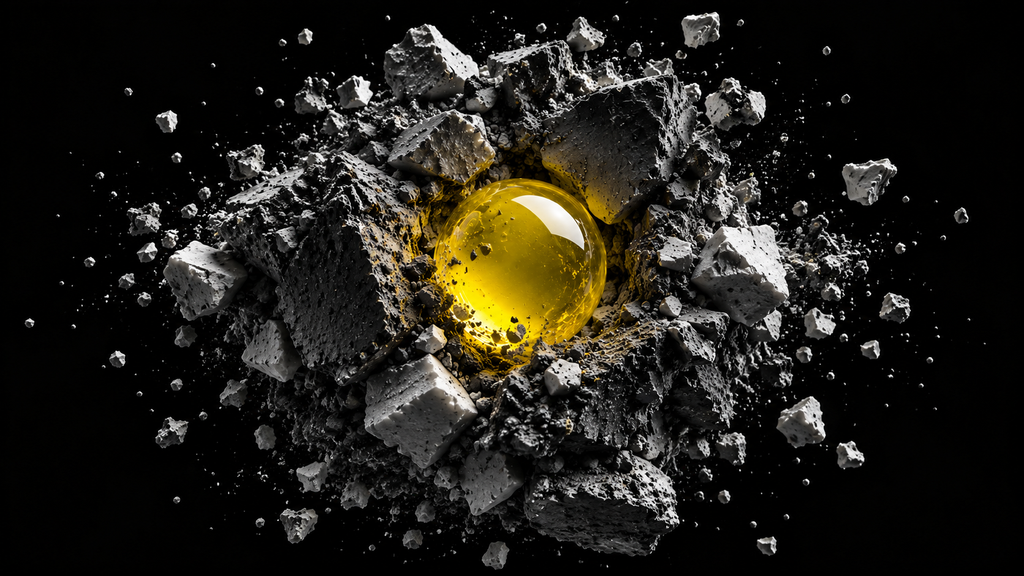
Concrete is not exactly a friendly environment for living organisms.
Fresh concrete is highly alkaline, with a pH around 12–13. The mixing process also involves mechanical forces, shear, heat, and chemical exposure.
For bacteria, this creates a serious survival challenge.
Imagine trying to protect a biological organism while it is being distributed through an industrial mixture containing cement, aggregates, water, and chemical admixtures.
That is essentially the problem researchers face.
Researchers Are Exploring Protective Systems
One promising direction is to place bacteria inside carriers rather than introducing them directly into the concrete.
Researchers have investigated approaches involving:
- Lightweight aggregates
- Hydrogel capsules
- Porous materials
- Microencapsulation
- Other protective carrier systems
These materials can provide a physical barrier around the bacteria, giving them a better chance of remaining dormant until conditions become suitable for activation.
But this introduces another engineering trade-off.
The more protection we provide to the bacteria, the more complicated and potentially expensive the concrete system can become.
That leads directly to the second major bottleneck.
The Initial Cost Premium
Standard concrete has a major advantage:
It is relatively cheap and incredibly scalable.
Construction companies already have established supply chains, batching plants, mixers, transportation systems, quality-control procedures, and trained workers built around conventional concrete.
Introducing bacterial systems changes that equation.
Specialized strains, protective carriers, encapsulation processes, additional materials, and quality-control requirements can increase the initial cost of the mixture.
This creates an important question for engineers and contractors:
Why pay significantly more today for a material whose biggest financial benefit may appear years or decades later?
This is where the economics of self-healing concrete become just as important as its chemistry.
Initial Cost vs. Lifetime Cost
A major mistake would be to judge bioconcrete only by its initial price per cubic metre.
Concrete isn’t simply a product purchased on day one.
It is part of a structure that may need to perform for decades.
A conventional concrete structure can accumulate costs through:
- Crack inspections
- Maintenance
- Repairs
- Traffic disruption
- Labour
- Replacement materials
- Structural rehabilitation
- Reduced service life
Self-healing concrete could potentially shift some of those costs.
For example, if an expensive concrete mixture significantly reduces future repair requirements, its lifetime cost could eventually become competitive with—or even lower than—that of conventional concrete.
The problem is that proving this requires more than a successful laboratory experiment.
It requires understanding the entire life cycle of the material.
This Is Where My Research Comes In
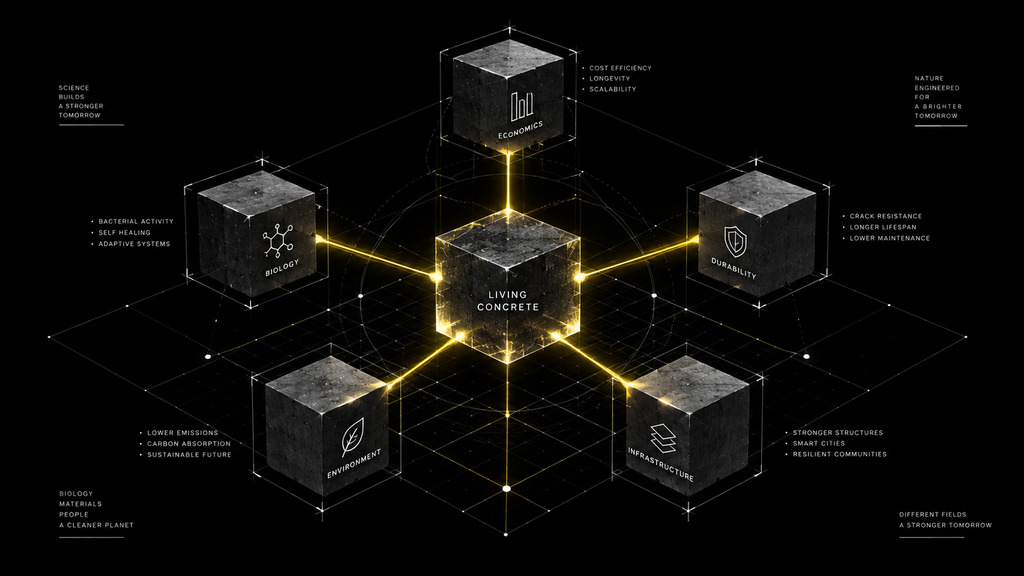
My theoretical literature review focuses on this exact gap.
The research isn’t simply asking:
Can bacteria heal concrete?
That question has already received considerable attention.
Instead, I am interested in a broader engineering question:
What would it take to make bacterial self-healing concrete economically and technically practical at infrastructure scale?
To answer that, different pieces of research have to be connected.
One study might investigate bacterial survival.
Another might examine crack-healing performance.
Another could analyse the mechanical properties of the concrete.
Another might investigate the cost of bacterial strains or encapsulation.
The challenge is that these studies often exist separately.
My goal is to synthesise fragmented datasets and research findings—from economic models to mechanical-performance measurements—to identify the most cost-effective pathways toward scalable bioconcrete.
Bridging the Laboratory and the Batching Plant
This is perhaps the most important distinction.
A laboratory experiment can control almost everything:
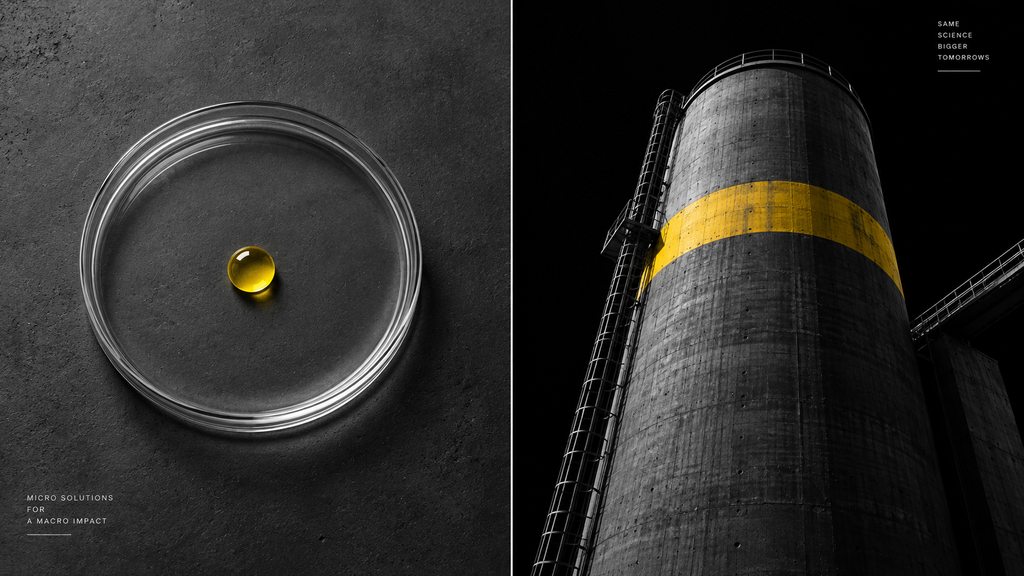
- Bacterial concentration
- Temperature
- Moisture
- Crack width
- Concrete composition
- Curing conditions
- Testing duration
A commercial batching plant cannot operate with the same level of control.
Concrete must be produced rapidly, consistently, and economically.
Thousands of cubic metres may need to be produced for a single infrastructure project.
Therefore, the question changes from:
Does this formulation work?
TO : Can this formulation work repeatedly, predictably, and affordably under real construction conditions?
That is a much harder problem.
Finding the Sweet Spot
The future of bioconcrete may ultimately depend on finding a balance between bacterial survival, structural performance, healing efficiency, and cost.
Consider the trade-offs.
Too Little Protection
The bacteria may not survive the mixing and curing process.
Too Much Protection
The system could become unnecessarily expensive or alter the properties of the concrete.
Too Many Bacteria
The cost and material complexity may increase without producing proportional benefits.
Too Few Bacteria
There may not be enough biological activity to produce meaningful crack sealing.
The goal is therefore not simply to maximize bacterial survival.
It is to find a practical biological system that provides meaningful engineering benefits at an acceptable cost.
That is where optimization becomes critical.
Could Local Materials Make Bioconcrete More Affordable?
One interesting direction is reducing dependence on highly refined or expensive inputs.
If future research can identify locally available carrier materials, bacterial strains, or production methods that perform adequately, the economics could change considerably.
Instead of designing bioconcrete around expensive laboratory-grade components, researchers could investigate systems compatible with existing construction supply chains.
That could make the technology more realistic for countries experiencing rapid infrastructure development.
For a country such as India, where enormous quantities of concrete are used for roads, housing, bridges, metros, ports, and other infrastructure, even a small improvement in concrete durability could have significant long-term implications.
The Bigger Question: What Does “Successful” Mean?
Another important part of my research is defining success correctly.
A self-healing concrete system shouldn’t be considered successful simply because a crack looks smaller under laboratory conditions.
A scalable system needs to answer several questions:
- Does the healing mechanism work reliably?
- Do the bacteria survive manufacturing?
- Does the concrete retain the required properties?
- How much does the technology increase construction costs?
- How much maintenance could it realistically prevent?
- Does the economic benefit remain positive over the structure’s entire service life?
- Does the technology make sense outside the laboratory?
These questions shift the focus from simply proving that self-healing works to determining whether it is actually worth implementing.
From Smart Materials to Smarter Infrastructure
The exciting part of self-healing concrete isn’t simply that bacteria can produce minerals.
It is the possibility of changing how we think about infrastructure.
Traditional engineering often follows a cycle:
Build → Deteriorate → Inspect → Repair → Repeat
Self-healing materials suggest another possibility:
Build → Respond to minor damage → Heal → Maintain longer
This doesn’t mean future bridges will magically repair every crack.
Self-healing technology is not a replacement for structural design, construction quality, inspection, or major repairs.
Instead, its potential lies in dealing with small-scale damage before it develops into a much more expensive problem.
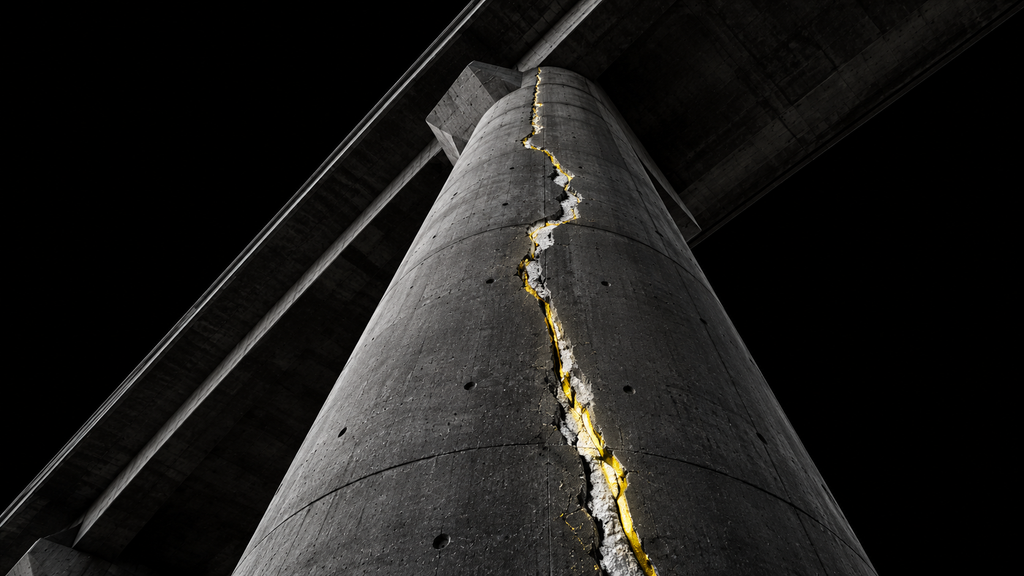
The Future Isn’t Just Stronger Concrete
The future of construction isn’t necessarily about making concrete stronger at any cost.
It could be about making concrete smarter.
A material that can react to damage, reduce maintenance requirements, and potentially extend service life represents a different way of thinking about infrastructure.
Getting there is not just about discovering another type of bacteria.
It requires researchers, engineers, economists, material scientists, and construction companies to work together to solve the much bigger problem of scale.
The real breakthrough might not be finding another bacterial strain.
It might be figuring out the right combination of biology, materials engineering, manufacturing, and economics.
Solving the Scale-Up Bottleneck
Bioconcrete has demonstrated an extraordinary idea: a building material can have its own tiny repair system embedded within it.
But going from a small experiment in a laboratory to an actual bridge is a huge leap.
The Survival Gap is about whether microorganisms can survive the conditions involved in concrete production.
The Initial Cost Premium is about whether their benefits are worth the additional investment upfront.
The bigger economic question is whether reduced maintenance and longer service life can eventually compensate for those initial costs.
That is what my research is trying to understand.
Keeping our cities from falling apart doesn’t mean simply spending more money repairing old concrete. The future of infrastructure isn’t about making things stronger—it is about making them smarter.
Maybe, in the next generation of building materials, biology will become another tool in the engineer’s toolbox.
Such an informative and well-written blog! 👏 Really enjoyed reading it and learning more about concrete and its applications. Great work—looking forward to more content like this! 🏗️✨
thank you for your feedback
Who knew concrete could be this interesting
thank you for your feedback